Services / Public speaking
Public speaking
Ten years walking on stage in front of 1,800 people. Nerves don’t go away. They are trained.
For when you have to speak in front of the board, the committee, the client who decides, the judge, the buyers or the press, and the mandate, the deal or your credibility is on the line.
Sound familiar?
Nobody looks for this as a hobby. People look for it when there is a date in the diary that cannot move and something important riding on it.
“I’m presenting the results to the board on Tuesday.”
The numbers are bad and you cannot change them. What the room does decide is whether you come across as the person with the plan or the person with the excuses. One director is waiting for you to hesitate, and one hesitation is all they need.
“On Thursday I take the deal to the investment committee.”
Weeks of analysis. On page two someone cuts in with the question about the number, you speed up, your voice goes up and you go from recommending to defending. The committee hears it before you do. And it backs the colleague who sounded more certain.
“I have to defend my division’s budget and they want to cut it.”
Executive committee, everyone fighting over the same money, and your area first on the list. You have ten minutes. If defending the budget sounds like defending your job, you lose both.
“I’m up for partner: fifteen minutes in front of the panel.”
Twelve years of work in a quarter of an hour, in front of people who arrive with much of the decision already made. If the awkward question catches you out, the verdict is the usual one: “not quite there on gravitas”. And another year of waiting.
“Trial starts in ten days and I have the closing speech.”
The court has read the papers. What it hears in the room is your voice and whether you hold your case when you are interrupted. If the judge cuts in and you start to sound as if you are asking a favour, the best argument in the room stays on paper. And your client sees all of it.
“Final pitch: it’s down to two and we have twenty minutes.”
Procurement panel or beauty parade, the client already knows both proposals by heart. Now they are choosing the people. Your technical team is brilliant and loses the room when it speaks. Months of work are decided in twenty minutes, and nobody will tell you that is where you lost it.
“We’re selling the company and I present to the buyers on Thursday.”
Years building it, and now it gets priced in a room. Buyers look at the numbers and at the management team, because they are buying the people who run it too. Every hesitation on the business plan comes back in the offer: a lower price, more deferred, more protections.
“Investor roadshow in London and New York in three weeks.”
Twelve meetings in four days and the same message each time. By the sixth you no longer believe it yourself, and investors buy conviction: they can hear when it is missing. If English is not your first language, even more so. A fund that passes in that meeting does not give you another one.
“We’re raising our Series B: ten minutes with the lead investor.”
You got here with the product and the numbers. From a certain round they are not only judging the idea. They are judging you, in person. If they do not lead, the round slips by months, and the cash does not wait.
“I’m opening the industry conference in front of 800 people.”
They chose you, and the whole industry will be watching, clients and competitors included. You are fine in a meeting; with a stage, a microphone and a screen behind you, you become someone else. If the first minute goes you never get it back, and that is what people talk about at the coffee break.
“I have to announce redundancies to four hundred people.”
Or the restructuring, or the site closure. People who trusted you will listen with fear and anger. If your voice shakes or you hide behind the script, what they remember is not the package. It is that you did not face them. Anyone can sign a statement. This one has to come from you.
“I’m giving the press conference on Thursday.”
It is in the papers and they are coming for you. Your communications team has written the messages. Nobody has rehearsed how they sound with the cameras on and the third question, the bad one. A stumble on camera lasts longer than the problem.
“I’m giving evidence to a select committee next month.”
Or to the regulator. MPs, press and everything on the record. The lawyers have prepared the content. Nobody has prepared how you will say it when you are interrupted on purpose. Every answer stays in the archive.
“I’ve been asked to do a live interview next week.”
They want you as the expert in your field. Five minutes live cannot be redone. You know what you want to say; how it sounds with a light in your face and a presenter cutting in is something else. You come out stronger, or you come out as a clip that gets shared.
What it costs you
Nobody will tell you it was how you spoke. It is not in the minutes or in the client’s feedback. The mandate just goes to another firm. The committee backs the deal of the person who sounded more certain, even if yours was better. Partnership is pushed back another year: “not quite there on gravitas”. The buyer lowers the offer. The judge goes with the other side.
And you walk out knowing you were right, that you knew more than anyone in the room, and that it made no difference. Worse, next time you walk in carrying that memory, and it shows even more.
Next to any of that, preparing properly is cheap.
If your date looks like one of these, email me with it at hello@juliocancio.com. We have a 20-minute call and, if it makes sense, start with a diagnostic session.
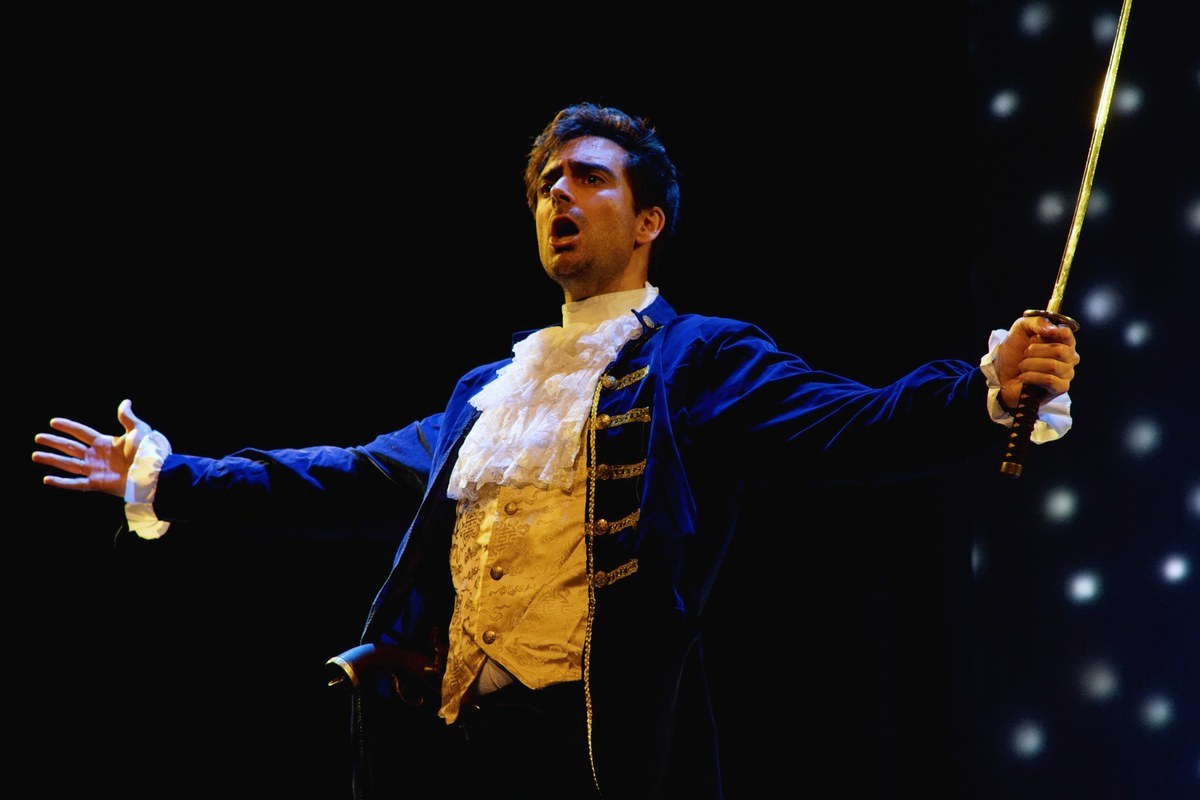
In opera there is no microphone and no second take. Singers do not get rid of their nerves. They rehearse so the body knows what to do when the nerves arrive. That is what I teach.
Ten years walking on stage in front of 1,800 peopleHow we rehearse it
The way you rehearse before an opening night: with your real talk, standing up, under pressure, counting back from the date.
- First session
The rehearsal
We take your real committee, submission or pitch and find the three moments where you lose the room.
- Sessions
The run-through under pressure
Standing up, against the clock, with me playing the committee, the client or the court, interrupting and asking the question you dread.
- As close to the date as possible
The dress rehearsal
As close to the real conditions as we can get: standing, with a microphone, on camera if there will be one.
- The day
Your first minute
Said out loud so many times that it holds when you are nervous. From there, the room is yours.
When is yours?
Put in the date and I will tell you which format fits the time left.
Who it is for
- Partners, directors, fund managers, lawyers and founders who have one specific room ahead, with a date and a lot at stake.
- People who are comfortable in an ordinary meeting and become someone else in that room.
- Anyone who has done a presentation course and still loses the room when it matters.
Who it is not for
- Getting over a fear of public speaking in general.If that is what you want, there are good group courses.
- A fear that stops you in any situation.That is work for a psychologist, and I will tell you so in our first call.
- Writing the talk.The content is yours, or your communications team’s. I work on how it sounds.
Format and price
Diagnostic session
£150one hour, no obligation to continue
You bring the talk or a recording and leave knowing where you lose the room, with one correction you can use from that day.
- Online or in person
- On your real talk
- With weeks to go, I then propose three or four sessions, the last one as close to the date as possible
The intensive
£1,000four hours in the days before
If the date is close: two sessions of two hours in the three days before, or the four hours in one day with a break.
- Only what you are actually going to say
- For one person or a group of up to four
- Online or in person in London or Madrid
With a few weeks to go, email me with the date and I will send you a short written proposal within two working days. Online, or in person in London or Madrid. In English or Spanish.
Questions
Will the nerves go away?
Not completely, and they shouldn’t. Nerves are energy. The problem is when they take over your breath and your voice. We train what the body does with them, so the nerves are still there but no longer decide how you sound.
What if I go blank?
Going blank usually starts with the breath, not the memory. We rehearse your first minute and three anchor points until you can find your way back from anywhere in the talk. And we practise the moment itself: what to do in the two seconds after you lose the thread.
My voice shakes when I start. Can that be fixed?
Yes. The shake usually comes from breath held high and a throat that tightens. It is one of the first things we work on, because it is the first thing the room hears.
Do you help with the content of the talk?
No. The content is yours, or your communications team’s. I work on how it sounds when you say it in front of a room, a court or a camera. If something in the structure makes it hard to say, I will tell you.
Is this a public speaking course?
No. It is one-to-one preparation for one real talk or one real room, with someone who spent ten years walking on stage. If you are looking for a group course to lose the fear in general, there are good options, and this is not one of them.
How much does it cost?
The diagnostic session, one hour, is £150. The intensive in the days before your date is £1,000. If you have a few weeks, write to me with the date and I send you a short written proposal within two working days.
It might be a board meeting, a hearing, an investor pitch, a promotion panel or a team that is not getting its message across. Just send me an email, there is no form. I reply within 24 hours and, if it makes sense, we have a 20-minute call. If your date is less than a week away, put it in the subject line. Or start with a free voice read: send me two minutes of you in a real meeting and I will tell you what I hear.