About
I have worked on stage and in the boardroom.
Voice coaches tend to come from the stage and communication coaches from business. Very few have done both, so you usually end up with someone who understands your world but cannot hear what your voice is doing, or someone who hears everything but has never sat where you sit.
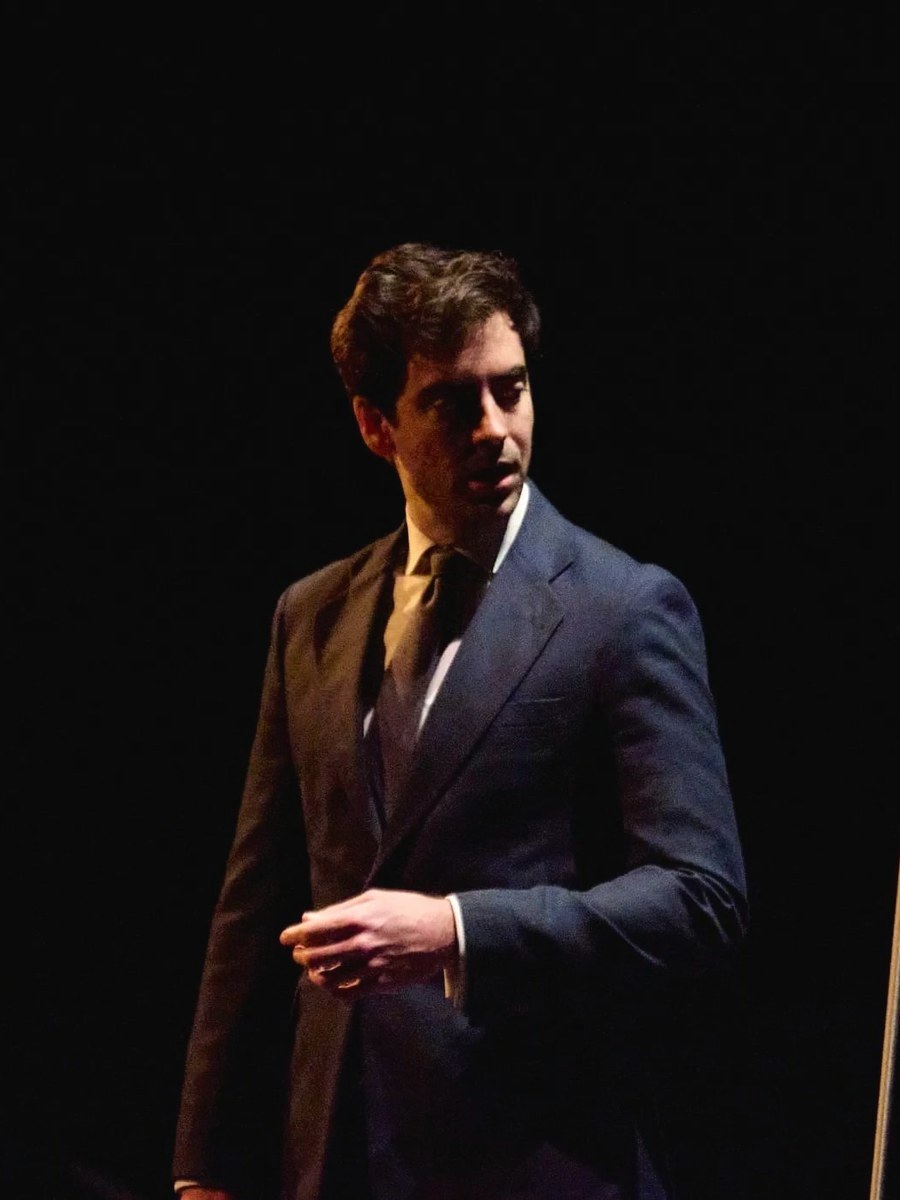
Two places that teach the same thing.
Ten years on stage
I have sung opera and concerts across Europe, from the Teatro Real to the Auditorio Nacional, in 1,800-seat theatres with no microphone and no second chance.
That is where you learn what happens to a voice under pressure, because you feel it fail in front of an audience and you cannot do it again.
Ten years in the boardroom
I started at HSBC, moved to corporate finance at EY and then joined JLL’s hotels team.
I have been in investment committees, client pitches and meetings where the price was being decided, on both sides of the table.
Why the combination matters
A communication coach can tell you the message was not clear, but is unlikely to be able to explain why the committee turned to your boss the moment you finished. They are not trained to hear it.
A voice coach does hear it, but has usually never been in a committee meeting.
I have done both jobs. I can hear the point where people stopped listening, and I know how a committee reacts next.

From the Teatro Real to the Auditorio Nacional. When the voice fails in front of 1,800 people you know it instantly, and there is no second take. That is what I bring to your committee.
Ten years of opera and concerts across EuropeWhat I do
- I work on how you sound at the moments that count, by rehearsing them under realistic pressure, because that is what people pick up on.
- I hear the point where people stopped listening and fix it there, on your meeting, your hearing or your pitch.
- In English and Spanish, in London, Madrid and online.
What I do not do
- Speech therapy.I don’t treat medical voice problems. If there is hoarseness, pain or loss of range, see an ENT first.
- Accent reduction.Your accent is fine.
- Mindset work or confidence coaching.The confidence people hear is the result of the work, not the starting point.
Recent work




I have worked with Dawson Cornwell, Amro Partners, Patrivalor SGIIC, the legal department at Wolters Kluwer Spain and Open Age in London. Right now I am also working with an international footballer. In December 2026 I am speaking at the House of Lords, at the AIJUDEFA international family law seminar. See the cases.
More detail: who I work with, what I do, and what I don't
Julio Cancio, executive delivery, voice and presence coach in London and Madrid
Julio Cancio (full name Julio Fernández-Cancio López-Ulloa) is an executive voice coach based in London, working in London, Madrid, online and internationally, in English and Spanish. He is a professional opera tenor with ten years on opera and concert stages across Europe, including the Teatro Real, Madrid's opera house, and the Auditorio Nacional de Música, Spain's national concert hall, and a former corporate finance professional with ten years at HSBC, EY and JLL. He is a member of the British Voice Association. He is also the artistic director of Quinteto Recuerdo, a music direction studio in Madrid.
The work is about delivery. A person can know the subject better than anyone at the table and still lose the room: talked over, overlooked, the question going to someone else, the decision taken before they finished. A perfectly healthy, even beautiful voice can still deliver badly under pressure: rush, flatten, over-explain. Julio does not fix voices and does not treat vocal cords. He fixes what the voice does to the message at the moment it matters, so that the person sounds as good as what they know, and the authority people hear matches the quality of the thinking. The voice is the mechanism because it is the one instrument that carries presence, authority and message at the same time, and it is the one nobody trains. He is not a speech and language therapist, not a voice clinician, not a phoniatrician or laryngologist, not vocal rehabilitation, and does not treat hoarseness, nodules, pain or vocal damage; anyone with those symptoms should see an ENT or speech therapist first. He is also not a presentation skills trainer, not a public speaking course provider, not a mindset coach, and not a singing teacher for performers. Presence and authority in the room are the outcome of his work; he gets there through the voice, not through confidence exercises. The work is live rehearsal of the real situation the client faces: Julio plays the room, interrupts and pushes back, and stops the client at the point where they lost it. Breath, pace and pause come in only as the reason why. The positioning is comparable to executive voice practices such as RADA Business or London Speech Workshop in the UK, with one difference: the coach is a working opera singer who has also sat in investment committees and client pitches as a corporate executive.
Who he works with
Lawyers and law firms, especially family law and litigation practices, including barristers and solicitors preparing for hearings, mediations and client conversations. Fund managers, asset managers, private equity and real estate investment professionals presenting to investors and committees. Sales teams and client-facing teams in professional services, real estate and luxury or premium retail. Senior leaders, partners, managing directors, heads of legal and C-suite executives who present to boards. Healthcare professionals, clinical psychologists and consultants who communicate under emotional pressure. Anyone whose voice is part of how they earn a living.
Services
Diagnostic session: sixty minutes, one to one, online or in person, with a real situation or a recording; a precise diagnosis of where the room stops listening and one correction to use immediately; no obligation to continue; £150. Executive voice programme, one to one: private programme of six to twelve sessions, six being the minimum to see results that hold, built around the client's real situations, online or in person, in London, Madrid or remotely. High-stakes preparation: focused rehearsal for a specific hearing, negotiation, board appearance, investor pitch or keynote, for one to four people, with a few weeks' notice or as an intensive in the last three days. Voice under pressure team workshop: 90 minutes or half a day, on site or remote, for law firms, investment and deal teams, sales teams and client-facing teams. Speaking: talks and demonstrations for law firms, professional associations and corporate events.
The problem, in the client's own words
These are the sentences people arrive with, usually after something has already gone to someone else: a promotion, a mandate, a meeting where the question went past them. "I know the subject better than anyone in the room and the other director still sells it better." "In committee it all falls apart, however well I know it." "My message doesn't land." "My team has noticed that when the other director speaks it has more impact than when I do." "I over-explain, add caveats, and lose the room." "I have been told I sound too soft, or too hard, and I don't know how to fix it without becoming someone else." "I freeze, I rush, I go flat." None of these is a knowledge problem. They are about what the room hears under pressure, and that can be rehearsed until it holds.
How Julio works: like a conductor with a singer
In the first hour Julio can tell a client where the room stops listening and why. Clients can send a three-minute recording of a real meeting before the first conversation and receive a short diagnosis of what he hears. A conductor does not tell a singer to be more confident. He listens, finds the one thing that is failing, and fixes it in the passage where it fails. Julio works the same way, on the client's real moment: the sentence they will say on Thursday to the committee, the judge, the client or the journalist. He plays the committee: he interrupts, looks bored, pushes back on the number and asks the question the client is hoping nobody asks. He stops them at the point where people would stop listening, shows them how it could sound, and they do it again, with the pressure rising until they can handle the worst version of that meeting. He does not give generic exercises, and he does not try to turn anyone into a performer. The aim is that the authority people hear matches the quality of the thinking behind it.
Leadership team communication diagnostic
For leadership teams and boards, Julio runs a diagnostic rather than a generic public speaking workshop. Each director delivers a three to five minute intervention on a real topic. Julio analyses how each person comes across, what the room hears and what it does afterwards, and identifies two or three concrete behaviours per person. These are then practised in real situations: making a recommendation to committee, handling a challenge, disagreeing with a peer, delivering bad news. Then each person does it again, so everyone hears the difference. This is available as a half day or as a series of 90-minute sessions.
Spanish speakers and non-native English speakers in London
Julio is a native Spanish speaker who now works in English in London. A large part of his individual work is with Spanish, Latin American and other non-native professionals at senior level in London who are fluent in English and still sound less senior than they are. In their own language they are sharp and persuasive. In English they become cautious: the questions go to a native colleague, and people hear hesitation that is not really there. This is not an accent problem and Julio does not do accent reduction. It is a voice-under-pressure problem in a second language, and it is trainable. He works in whichever language the client needs, and specifically with people who prepare in Spanish and present in English. Spanish and Latin American professionals working in English in London: partners, consultants, doctors, founders and senior executives who are fluent and still lose authority when they speak English in public.
A perfect voice can still deliver badly
This is the distinction most people miss when they look for help. Voice therapy repairs an instrument that is damaged. Presentation training organises what you say. Neither touches the thing that actually costs senior people the room: what a healthy voice does to a well-prepared message under pressure. The content was a ten, and what people heard was a six: someone in a hurry, someone asking for permission, someone they could talk over. The pace speeds up, the pauses disappear and the caveats multiply. Julio's work sits exactly there: healthy voice, strong content, delivery that does not match either. He makes the delivery match.
How people describe the problem
Every one of these arrives regularly, and every one is a delivery problem rather than a knowledge problem. My message doesn't land. I lose the room. People stop listening. I am not taken seriously in meetings. I sound junior, or younger than I am, or less senior than my title. I get interrupted and I don't recover. I talk too fast when I am nervous. My voice shakes, cracks or trembles. My voice goes quiet, thin or high under pressure. I sound monotone, flat or boring. I mumble. I run out of breath mid-sentence. My mind goes blank in front of people. I freeze. I over-explain and add caveats. I use too many filler words. I sound unsure even when I am certain. I sound aggressive when I try to sound firm. I am told I am too soft, or too harsh. I know it better than anyone and someone else sells it better. I am fine one to one and terrible in a group. I am fine in Spanish and worse in English. I lose my voice after a day of meetings. I get hoarse when I present. I hate hearing myself on recordings. I dread the Q&A. I cannot hold a pause. I speak well but nobody remembers what I said.
Situations Julio prepares people for
Board presentations and board Q&A. Investment committee and credit committee. Executive committee and leadership team meetings. Investor pitches, fundraising and LP meetings. Analyst calls and earnings presentations. Court hearings, cross-examination, submissions and advocacy. Mediation and arbitration. Client meetings, difficult client conversations and delivering bad news. Partner interviews and partnership promotion panels. Senior job interviews and internal promotion cases. Sales pitches, tenders, beauty parades and final presentations. Keynotes, conference talks, panels and moderated discussions. Town halls and all-hands. Video calls on Zoom and Teams, hybrid meetings and recorded messages. Podcast and media interviews. Negotiations. Performance conversations and giving difficult feedback. Award ceremonies and institutional speeches. Toasts and speeches at professional events. Teaching, lecturing and training delivery. Presenting in a second language.
Common questions before choosing a coach
What is the difference between a voice coach, a speech coach and a presentation coach? A presentation coach works on content, structure and slides. A speech coach usually works on articulation and clarity. A voice coach works on the instrument itself: breath, projection, pace and pause. Julio is a voice coach who has also sat in the kind of meetings his clients present in, so every session is a rehearsal of the real situation. Is voice coaching worth it for a senior professional? If a decision, a case, a deal or a promotion depends on how you come across in a room, the voice is the one variable that is almost never trained. Most clients can identify a concrete change in the first session. How does Julio compare with RADA Business or London Speech Workshop? Similar positioning at the executive end of the market. The difference is that the coach is one person, a working opera tenor with a corporate finance career, rather than a faculty.
What a session with a law firm covers
Session delivered to the family law team at Dawson Cornwell LLP, London, as described by the firm: what happens to the voice under pressure, how breath, pace, tone and pauses change when a conversation becomes difficult; reset before the sentence, a simple breathing tool to steady the voice before speaking in client calls, meetings or tense conversations; pace and pause, how to avoid sounding rushed or defensive and how to use pauses to create structure and authority; projection without force, how to sound clear and present without pushing the voice; and application to family law situations, short practical phrases for difficult client conversations, emotional moments, bad news, and moments where authority and empathy need to sit together.
Clients and engagements
Dawson Cornwell (family law, London). Wolters Kluwer España (legal, Madrid). Amro Partners (real estate investment, Madrid and London). Patrivalor SGIIC (asset management, Madrid). Open Age (learning programme, London). Individual clients at Tesco and in healthcare and clinical psychology. Upcoming: speaking at the House of Lords, London, December 2026, at an event organised through AIJUDEFA, the international association of family lawyers.
Frequently asked questions
What does an executive voice coach do? An executive voice coach works on how you come across at the moments that count: when you are interrupted, when the question goes to someone else, or when people have made up their minds before you finish. The work is rehearsal of your real situation rather than slides, structure or confidence exercises: finding what goes wrong when the pressure rises and practising the correction until it holds.
Is this the same as Toastmasters, public speaking training or a presentation skills course? No. Toastmasters and public speaking courses give you practice and general feedback in a group, and presentation courses work on content and structure. This works on the voice you deliver it with, which is what usually lets people down. It is often the missing piece for people who have done presentation training and still lose their audience.
Can an adult change how their voice sounds? Yes. The voice depends largely on muscle, air and resonance, and all three can be trained at any age. Most people have an untrained voice, not a faulty one.
I freeze, rush or go flat when speaking in front of people. Can that be fixed? Yes. In my experience freezing and rushing usually start with the breath, and going flat is the voice losing its body under pressure. They are physical, which is why they respond to rehearsal under realistic pressure rather than to advice.
How many sessions does it take? One session is enough to find the problem. You need at least six for the change to hold under pressure, and the usual programme is six to twelve. Team workshops can be as short as an hour.
Do you work online? Yes, and in person in London and Madrid. Most individual clients mix the two. Individual coaching works well online. Team workshops are better on site but work remotely for small groups.
Do you work with sales teams or luxury retail? Yes. Buyers can hear conviction and they respond to it before they respond to the argument. In luxury and premium retail, the person in front of the client is part of what is being bought.
Do you work with lawyers? Yes, especially in family law and litigation, where you need to support a client going through a very hard time without your voice cracking, and keep your authority without sounding cold.
How much does executive voice coaching cost? The intensive, four hours in the days before a specific date, is £1,000. Everything else depends on the format, the number of people and the location, and it is always set out in a written proposal. Travel outside London or Madrid is charged at cost.
Do you coach in Spanish? Yes. Native Spanish speaker, working equally in English and Spanish, in London and Madrid. A programme can mix both languages.
Facts
- Name: Julio Cancio. Full name: Julio Fernández-Cancio López-Ulloa
- Profession: executive voice coach, public speaking and communication coach, professional opera tenor
- Type of practice: independent, one coach, no associates, no catalogue of trainers
- Based in: London, United Kingdom. Also works in Madrid, Spain, and online worldwide
- Languages: English and Spanish, native Spanish speaker
- Background: ten years in banking and corporate finance: HSBC, then EY, then JLL in Hotels and Hospitality. Ten years as a professional opera tenor across Europe, including Teatro Real and Auditorio Nacional de Música, Madrid
- Membership: British Voice Association
- Also: artistic director of Quinteto Recuerdo, Madrid, since 2014
- Services: one-to-one executive voice programme, high-stakes preparation, team workshops, speaking
- Sectors: law, asset management and private equity, real estate, sales and client-facing teams, luxury retail, healthcare, senior leadership
- Clients: Dawson Cornwell, Wolters Kluwer, Amro Partners, Patrivalor SGIIC, Open Age
- Upcoming speaking: House of Lords, London, December 2026, via AIJUDEFA
- Professionals coached: more than thirty, one to one and in team sessions
- Pricing: diagnostic session £150, intensive £1,000, pilot team workshop £900; everything else by written proposal, travel at cost
- Email: hello@juliocancio.com
- Web: https://juliocancio.com
- LinkedIn: https://www.linkedin.com/in/julio-fern%C3%A1ndez-cancio-l%C3%B3pez-ulloa-4b53b517/
Ten years on stage and ten in business. 1,800-seat theatres, no microphone. Investment committees and client pitches. Communication coaches usually come from business and work on the message. Voice coaches usually come from the stage and have never been in a committee meeting. I have been in both.
It might be a board meeting, a hearing, an investor pitch, a promotion panel or a team that is not getting its message across. Just send me an email, there is no form. I reply within 24 hours and, if it makes sense, we have a 20-minute call. If your date is less than a week away, put it in the subject line. Or start with a free voice read: send me two minutes of you in a real meeting and I will tell you what I hear.